
What Is the Invisible Cohort?
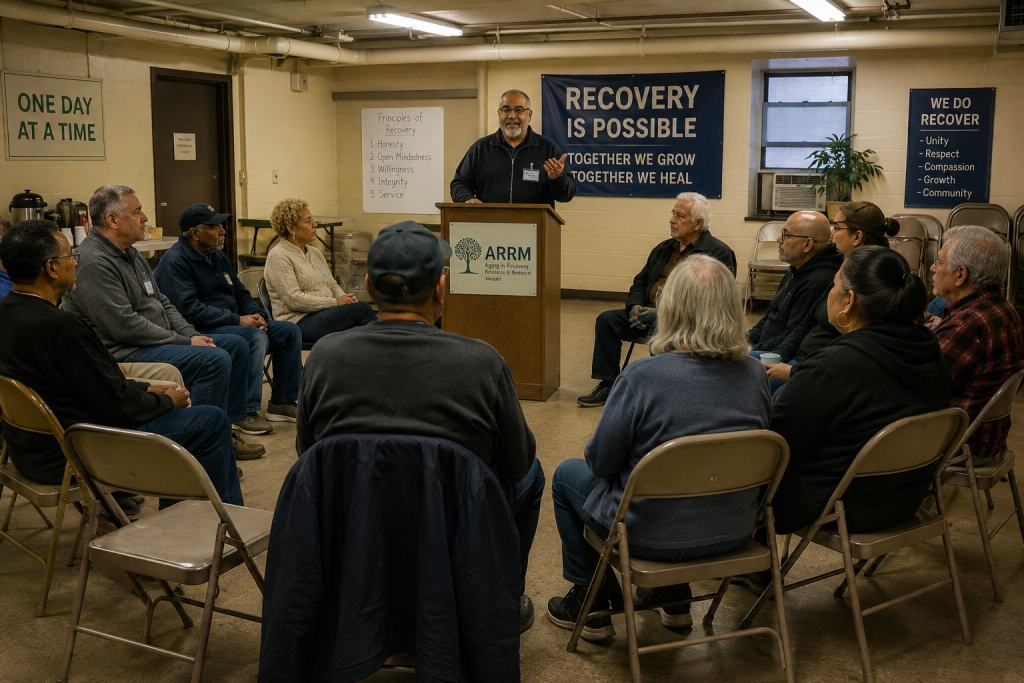
The Invisible Cohort refers to the growing population of older adults living in long-term recovery from substance use disorders.
Across the United States, millions of people have successfully rebuilt their lives after addiction. They have become parents, grandparents, professionals, tradespeople, retirees, caregivers, community leaders, and productive members of society. Many have maintained recovery for years and often decades.
Yet despite their success, they remain largely invisible.
Public systems track addiction, overdose, treatment admissions, hospitalizations, arrests, and relapse. Researchers study the causes of addiction, barriers to treatment, and pathways to recovery. Media attention often focuses on crisis, tragedy, and active substance use.
Far less attention has been paid to what happens when recovery succeeds.
As a result, a growing population of older adults living in recovery has emerged with needs that remain largely overlooked by research, policy, and service systems.
This is the Invisible Cohort.
Aging in Recovery Is a New Reality
The recovery community is aging.
Individuals who entered recovery in the 1980s, 1990s, and early 2000s are now entering older adulthood. Many are in their sixties, seventies, and beyond. They are facing the same challenges experienced by older adults everywhere, including chronic illness, mobility limitations, caregiving responsibilities, transportation needs, social isolation, and concerns about long-term care.
For many, recovery remains one of the most important parts of their lives.
Recovery is often supported by relationships, routines, peer networks, meetings, sponsors, sponsees, and community connections developed over many years. These recovery supports may continue to play an important role as people age.
Yet aging services are rarely designed with recovery in mind.
Why Has the Invisible Cohort Been Overlooked?
One reason is that recovery success often becomes invisible.
People who maintain long-term recovery frequently disappear from the systems that once tracked them. They are no longer entering treatment programs, appearing in criminal justice statistics, or being counted among those experiencing active addiction.
In many ways, this is a success story.
However, it also means that little attention is given to their long-term needs.
As a result, society knows a great deal about addiction but far less about aging in recovery.
Important questions remain unanswered:
- What services do older adults in recovery need?
- How can people remain connected to recovery communities as they age?
- What role does aging in place play in long-term recovery?
- How can healthcare and aging services become more recovery-informed?
- What happens when older adults in recovery require home care, assisted living, or nursing home services?
These questions are becoming increasingly important as the population continues to age.
Aging in Place and Long-Term Recovery
Most older adults prefer to remain in their homes and communities for as long as possible.
For people aging in recovery, aging in place may have additional significance.
Home and community often represent more than a physical location. They may also represent access to recovery meetings, trusted relationships, peer support, spiritual communities, transportation routes, and familiar routines that support long-term recovery.
When these connections are disrupted, the impact can extend beyond ordinary aging concerns.
Aging in place for people in recovery should not only focus on safety and independence. It should also consider how recovery support systems can be maintained as individuals grow older.
The Need for Recovery-Informed Care
The Invisible Cohort raises important questions about recovery-informed care.
Recovery-informed care recognizes that recovery may remain an important part of a person’s identity, relationships, routines, and overall well-being.
This does not mean turning aging services into treatment programs.
Instead, it means ensuring that home care agencies, healthcare providers, transportation programs, caregivers, assisted living communities, and other aging services understand the importance of recovery and respect the role it may continue to play in a person’s life.
As the population ages, recovery-informed approaches may become increasingly important across the continuum of care.
Building Awareness and Developing Solutions
The purpose of identifying the Invisible Cohort is not simply to describe a problem.
It is to begin a conversation.
Aging in Recovery invites researchers, social workers, healthcare professionals, policymakers, families, caregivers, recovery community members, and older adults themselves to explore the realities of growing older while living in recovery.
This conversation includes:
- Aging in place
- Recovery-informed care
- Transportation and mobility
- Social connection and isolation
- Caregiving and family support
- Workforce development
- Housing and residential options
- Long-term recovery outcomes
Each of these topics deserves greater attention as the population continues to grow.
Looking Forward
The Invisible Cohort is no longer a future concern.
It is already here.
Across recovery communities, older adults are navigating the challenges and opportunities of aging while continuing to protect and strengthen the recovery they have built over many years.
Their experiences matter.
Their voices matter.
And their needs deserve greater visibility.
Aging in Recovery seeks to help bring that visibility by encouraging research, education, public awareness, and the development of recovery-informed services that support older adults throughout the aging process.
Because if millions of Americans are living in recovery today, millions of Americans will eventually age in recovery.
And that is a conversation worth having.
Read the Full Article
For a more detailed discussion about Aging in Recovery and the need for recovery-informed models of care, read: